

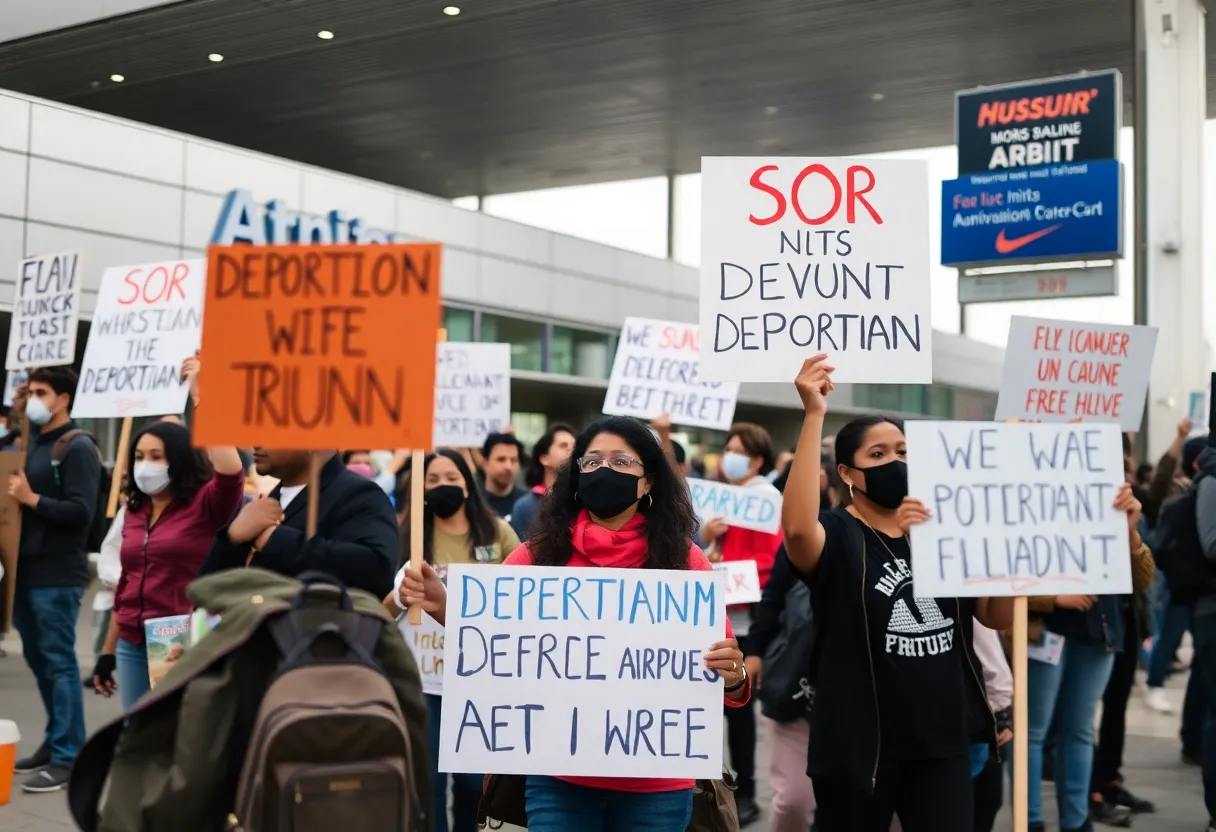
Romulus, Michigan, January 22, 2026
Activists in Romulus, Michigan, are urging the Wayne County Airport Authority to stop ICE deportation flights operating from Willow Run Airport. Recent reports indicate that nearly 100 flights were chartered by ICE in the past year, reflecting a significant increase in enforcement actions. Advocacy groups emphasize concerns over due process for detainees and the ethical implications of using local facilities for federal immigration enforcement. The growing opposition highlights a broader movement against ICE’s deportation practices across the nation.
Activists Call for Halt to ICE Deportation Flights at Willow Run Airport
Romulus, Michigan – Activists have called on the Wayne County Airport Authority to halt Immigration and Customs Enforcement (ICE) deportation flights operating out of Willow Run Airport near Ypsilanti. During a recent board meeting, advocacy groups urged officials to prevent ICE from using the airport for transporting detainees to detention centers.
According to Human Rights First, ICE chartered nearly 100 flights from Willow Run Airport in the past year, with flights increasing by 84% nationwide in 2025. These flights typically transport detainees to major immigration detention hubs in the South, such as Alexandria, Louisiana, where ICE maintains a deportation staging facility operated by the GEO Group. The same corporation operates the North Lake Processing Center in Baldwin, Michigan, ICE’s largest detention facility in the Midwest.
Activists express concern that many individuals on these flights have not had the opportunity for due process, including immigration hearings. They argue that the airport’s involvement in these operations raises ethical and legal questions, particularly regarding potential lawsuits from individuals who may have been wrongfully detained or deported.
Background on ICE Deportation Flights
ICE deportation flights are part of the agency’s efforts to remove individuals from the United States who are in the country without legal authorization. These flights often involve transporting detainees to various detention centers or directly to their countries of origin. The use of commercial airports for such operations has been a point of contention, with critics arguing that it implicates local communities in federal immigration enforcement actions.
Broader Protests Against ICE Operations
Protests against ICE have been widespread, with movements like “Abolish ICE” gaining traction in response to the agency’s activities. In June 2025, Los Angeles experienced significant demonstrations against mass deportations, leading to a state of emergency declaration and the deployment of federal forces. Similar protests have occurred in other cities, including Chicago, where faith leaders and activists marched to protest ICE’s presence in the area. These actions highlight the growing public concern over immigration enforcement practices and their impact on communities.
Implications for Willow Run Airport
The involvement of Willow Run Airport in ICE deportation flights has raised questions about the airport’s role in federal immigration enforcement. Activists argue that the airport should not facilitate deportations and have called for the Wayne County Airport Authority to cease allowing such flights. The outcome of these protests may influence how airports across the nation handle similar requests from federal agencies, potentially leading to policy changes regarding the use of airport facilities for immigration enforcement purposes.
Related Developments
In other parts of the country, protests have targeted airlines contracted by ICE to transport deportees. For example, in May 2025, Delaware residents protested Avelo Airlines for its involvement in deportation flights, urging the airline to end its contract with ICE. These protests reflect a broader public resistance to the privatization of deportation services and the role of private companies in facilitating immigration enforcement.
Conclusion
The recent protests at Willow Run Airport underscore the growing public opposition to ICE’s deportation practices and the use of local facilities for such operations. As these demonstrations continue, they may lead to increased scrutiny of federal immigration enforcement methods and prompt policy changes at both local and national levels.
FAQ
- What are the recent protests at Willow Run Airport about?
- Activists are protesting against ICE deportation flights operating out of Willow Run Airport near Ypsilanti, urging the Wayne County Airport Authority to halt these operations.
- How many deportation flights have been conducted from Willow Run Airport?
- According to Human Rights First, ICE chartered nearly 100 flights from Willow Run Airport in the past year, with flights increasing by 84% nationwide in 2025.
- What are the concerns raised by activists regarding these flights?
- Activists are concerned that many individuals on these flights have not had the opportunity for due process, including immigration hearings, and that the airport’s involvement in these operations raises ethical and legal questions.
- Have similar protests occurred elsewhere?
- Yes, similar demonstrations have taken place at other airports and ICE facilities across the country, reflecting growing public opposition to the agency’s methods and policies.
- What is the broader context of these protests?
- These protests are part of a broader movement against ICE’s deportation practices, with movements like “Abolish ICE” gaining traction in response to the agency’s activities.
Key Features
| Feature | Description |
|---|---|
| Location | Willow Run Airport near Ypsilanti, Michigan |
| Activists’ Demand | Halt ICE deportation flights from Willow Run Airport |
| Number of Flights | Nearly 100 flights in the past year, with an 84% increase nationwide in 2025 |
| Primary Concern | Lack of due process for individuals on deportation flights |
| Broader Movement | Protests against ICE’s deportation practices, including the “Abolish ICE” movement |
Deeper Dive: News & Info About This Topic
HERE Resources