

News Summary
Henry Ford’s construction of the Quadricycle in his home marks a pivotal moment in the automotive industry. This innovative vehicle, with a 2-cylinder engine running on ethanol, set the stage for future advancements in vehicle design and manufacturing. Despite initial setbacks, Ford’s efforts led to the establishment of the Ford Motor Company, profoundly influencing modern automotive practices.
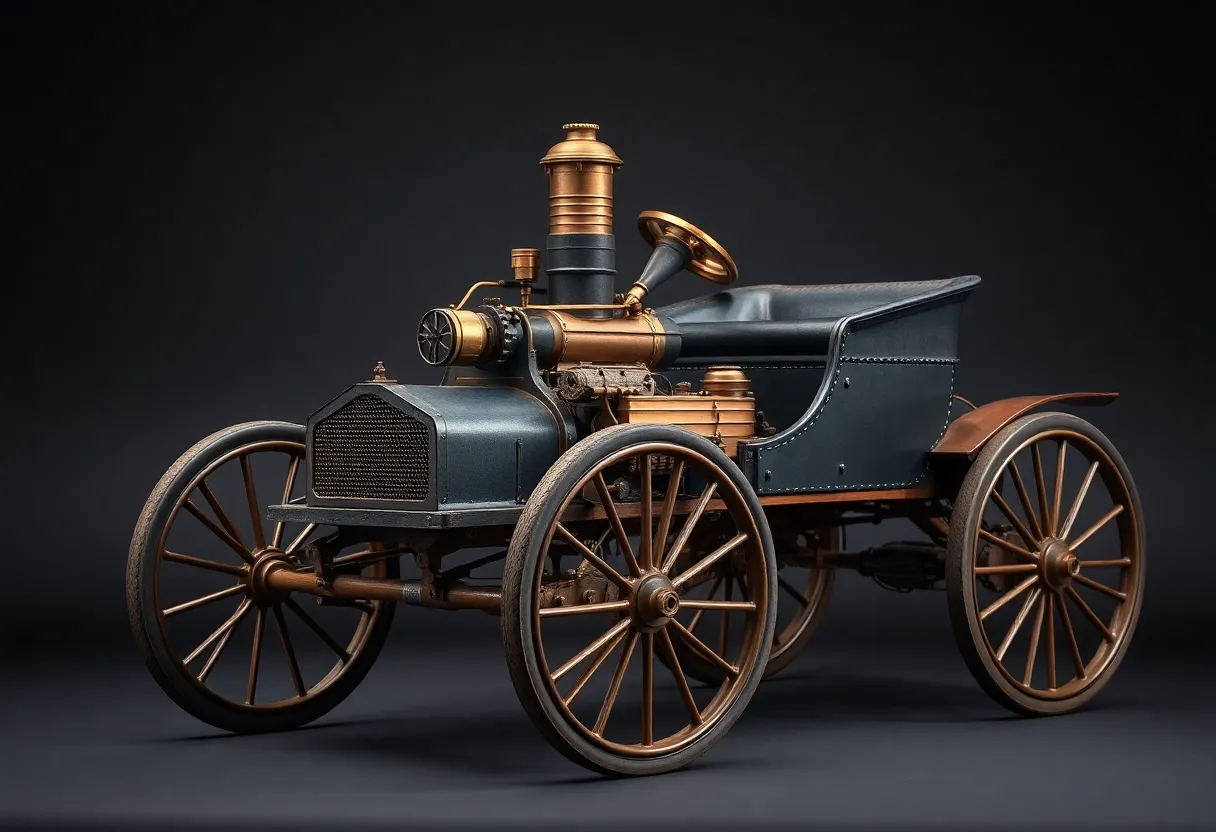
Detroit – On June 4, 1896, Henry Ford completed his first automobile, the Quadricycle, marking a significant milestone in automotive history. At the age of 32, Ford constructed the vehicle by hand in his home, where he encountered numerous challenges, including having to remove a door frame and parts of a wall to move the completed vehicle outside for its first test drive.
The Quadricycle was equipped with a 2-cylinder engine that operated on pure ethanol, showcasing Ford’s innovative approach to engineering. During its trial run on the morning of June 4, Ford successfully achieved an estimated speed of 20 miles per hour. This impressive feat occurred while Ford was employed as an engineer at the Edison Illuminating Company, where his work caught the attention of renowned inventor Thomas Edison, who later encouraged him to pursue further developments in the automotive field.
In 1899, bolstered by his initial success and the endorsement from Edison, Ford made a pivotal decision to resign from the Edison Company to establish Detroit’s first automobile manufacturing company, the Detroit Automobile Company. However, this venture faced difficulties and was ultimately dissolved. Subsequently, the stockholders formed the Henry Ford Company in 1901. This new company restructured into what would become the Caddy Automobile Company following Ford’s departure in 1902.
Despite these setbacks, Ford’s resilience in the automotive landscape led to the establishment of the Ford Motor Company, which would eventually grow to become a prominent force in the industry. His early work, starting with the Quadricycle, laid the groundwork for significant advancements in automobile manufacturing and mass production techniques.
Interestingly, historical records indicate that Ford initially sold the Quadricycle for $200 shortly after its completion in 1896. He later bought the vehicle back for $60. Today, the Ford Quadricycle holds a place of honor in the collection of the Henry Ford Museum located in Dearborn, where it serves as a testament to Ford’s early ingenuity and the beginning of a new era in transportation.
The Quadricycle’s design and engineering not only reflect Ford’s innovative spirit but also symbolize the dawn of the automotive age. As one of the first examples of a motorized vehicle built in America, the Quadricycle represents a significant leap forward in technology during the late 19th century, setting the stage for developments in vehicle design and manufacturing that would change the transportation industry forever.
Today, the legacy of the Quadricycle and Henry Ford continues to influence modern automotive engineering and manufacturing processes, demonstrating the enduring impact of Ford’s early endeavors on today’s automotive landscape.
Deeper Dive: News & Info About This Topic
HERE Resources
Additional Resources
- Click On Detroit: Henry Ford’s First Automobile
- Detroit Free Press: Wanted a Mechanic of Model Ts
- History.com: Henry Ford Leaves Edison
- Beaumont Enterprise: Ford Model T’s Legacy Explored
- Crain’s Detroit Business: Ford Heirs Sell Land
- Wikipedia: Henry Ford
- Google Search: Henry Ford Automobile History
- Google Scholar: Ford Automobile History
- Encyclopedia Britannica: Ford Motor Company
- Google News: Henry Ford News