

Detroit, MI, December 29, 2025
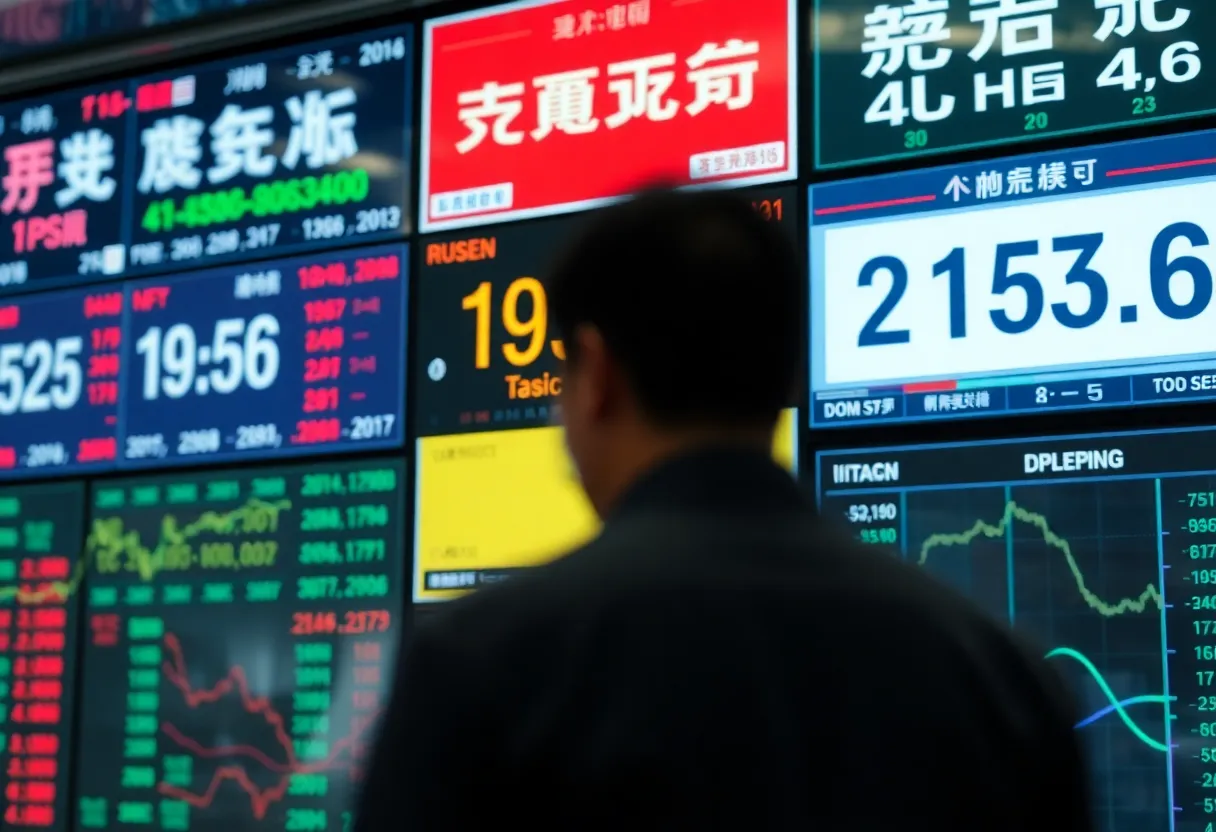
Asian stock markets showed varied responses to geopolitical tensions as China’s military exercises near Taiwan spooked investors on December 29. While Hong Kong and Japan saw declines, South Korea’s Kospi index rose thanks to strong performance from SK Hynix, and Taiwan’s Taiex displayed resilience. The markets reflected caution as red flags over international relations affected trading volumes and investor sentiment. Commodities also experienced fluctuations, with gold and silver prices dropping while oil prices rebounded.
Asian Markets Respond to Tensions: A Cautious Trading Day
Investors on Edge as Geopolitical Events Influence Trading
Detroit, MI – Asian stock markets took a hit on December 29, 2025, amid a backdrop of geopolitical tensions stemming from military exercises conducted by China near Taiwan. This environment created a cautious mood among investors, affecting trading volumes significantly during this typically slow holiday period.
The Hang Seng Index in Hong Kong fell 0.7%, reversing its early gains, while Japan’s Nikkei 225 slipped 0.4%. On a contrasting note, South Korea’s Kospi index recorded a surge of 2.2% owing largely to positive news surrounding SK Hynix. Notably, Taiwan’s Taiex Index showed a surprising resilience, increasing by 0.9% despite regional tensions.
Key Market Movements
- Hong Kong’s Hang Seng Index: Down 0.7% to 25,635.23, primarily due to geopolitical concerns.
- Japan’s Nikkei 225: Fell 0.4% to 50,526.92, influenced by light trading volumes and a stronger yen.
- South Korea’s Kospi: Rose 2.2% to 4,220.56, driven by a 6.8% surge in SK Hynix after an investment warning was lifted.
- Australia’s S&P/ASX 200: Dropped 0.4% to 8,725.70, as declines in financials offset gains in mining and energy sectors.
- Taiwan’s Taiex Index: Increased 0.9% to 28,810, showcasing resilience despite the geopolitical backdrop.
Geopolitical Developments
The geopolitical landscape was further complicated by China’s declaration of joint military exercises in the waters surrounding Taiwan. The exercises are touted by Beijing as a means to protect its sovereignty and national unity. In response to these maneuvers, Taiwan has placed its military on high alert and criticized China as the “biggest destroyer of peace.” These military actions are part of a broader context that includes sanctions initiated by China against 20 U.S. defense companies following a significant arms sale to Taiwan, valued at over $10 billion. Japan’s position was also clarified by Prime Minister Sanae Takaichi, who mentioned that Japan’s defense forces could potentially intervene should China take aggressive actions against Taiwan.
Market Reactions
The market reactions varied significantly across the region. While South Korea’s Kospi index benefited from SK Hynix’s performance, concerns about geopolitical tensions weighed heavily on the Hong Kong and Japan indexes. Taiwan, however, demonstrated strong investor demand particularly in the semiconductor sector, contributing to the Taiex’s positive movement.
Commodity Markets Update
- Gold: Prices fell by 1.3%, retreating to $4,494 per troy ounce after recent gains.
- Silver: Experienced a 2.3% decline, still holding high due to supply constraints and changes in China’s export policy.
- Oil: U.S. crude oil prices rebounded, rising to $57.87 per barrel.
Currency Markets Outlook
The U.S. dollar saw a weakening against both the Japanese yen and the euro, as the markets reacted to the mounting geopolitical tensions and ongoing economic indicators.
Background Context
The recent surge in tensions is underscored by China’s military drills and sanctions on U.S. defense firms, highlighting a significant point of contention between China and the U.S. Furthermore, Japan’s involvement escalates diplomatic strains in the region, which in turn fosters an atmosphere of volatility in financial markets.
Conclusion
The current trading environment in Asia reflects a cautious approach from investors as they navigate through these geopolitical tensions. As developments unfold in the Taiwan Strait and their broader implications for regional stability become clearer, it will be essential for businesses and investors alike to stay engaged, not only in understanding these dynamics but also in supporting local innovation and entrepreneurship to foster resilience in the economy.
Frequently Asked Questions (FAQ)
What caused the decline in Asian stock markets on December 29, 2025?
The decline was primarily due to China’s military conducting exercises near Taiwan, raising regional tensions and leading to cautious investor sentiment.
How did Taiwan’s stock market react to the geopolitical tensions?
Despite the tensions, Taiwan’s Taiex Index increased by 0.9%, indicating resilience in the market.
What were the key commodities affected by the market movements?
Gold and silver prices declined, while oil prices rebounded, with U.S. crude rising to $57.87 per barrel.
How did currency markets respond to the geopolitical developments?
The U.S. dollar weakened against both the Japanese yen and the euro, reflecting market reactions to the geopolitical tensions.
What is the background context of the tensions between China, Taiwan, and the U.S.?
The tensions stem from China’s military drills near Taiwan, sanctions on U.S. defense companies, and Japan’s involvement through statements by Prime Minister Takaichi, leading to diplomatic strains and market volatility.
Key Features of the Market Movements
| Market | Movement | Percentage Change | Key Influencing Factors |
|---|---|---|---|
| Hong Kong’s Hang Seng Index | Decline | -0.7% | Geopolitical tensions due to China’s military drills near Taiwan |
| Japan’s Nikkei 225 | Decline | -0.4% | Light trading volumes and a stronger yen amid regional tensions |
| South Korea’s Kospi | Increase | +2.2% | Gains in SK Hynix following the lifting of an investment warning |
| Australia’s S&P/ASX 200 | Decline | -0.4% | Declines in financials offsetting gains in mining and energy sectors |
| Taiwan’s Taiex Index | Increase | +0.9% | Resilience amid regional tensions, driven by strong demand for technology products |
| Gold | Decline | -1.3% | Retreat after recent gains |
| Silver | Decline | -2.3% | Supply constraints and changes in China’s export policy |
Deeper Dive: News & Info About This Topic
HERE Resources
Global Markets Show Modest Gains Amid Holiday Trading
Asian Stocks Surge Ahead of US-China Trade Talks
Asian Stocks Climb Ahead of US-China Trade Talks
U.S. Markets Plunge Amid Growing Debt Concerns
Detroit Faces Sinking Challenge, New Study Shows
U.S. and China Engage in Trade Talks to Ease Tensions
Gold Prices Rise Amid Trade Concerns and Economic Instability
Asian Technology Stocks Decline Amid U.S.-China Trade Tensions
Gold Prices Soar to New Heights Amid Economic Uncertainty
Market Meltdown: Asia-Pacific Stocks Take a Dive!

Author: STAFF HERE DETROITMI WRITER
DETROIT STAFF WRITER The DETROIT STAFF WRITER represents the experienced team at HEREDetroitMI.com, your go-to source for actionable local news and information in Detroit, Wayne County, and beyond. Specializing in "news you can use," we cover essential topics like product reviews for personal and business needs, local business directories, politics, real estate trends, neighborhood insights, and state news affecting the area—with deep expertise drawn from years of dedicated reporting and strong community input, including local press releases and business updates. We deliver top reporting on high-value events such as Movement Electronic Music Festival, Detroit Grand Prix, and America's Thanksgiving Parade. Our coverage extends to key organizations like the Detroit Regional Chamber and Focus HOPE, plus leading businesses in automotive and healthcare that power the local economy such as General Motors, Ford Motor Company, and Henry Ford Health. As part of the broader HERE network, including HEREGrandRapids.com, HERENorthville.com, HERENovi.com, and HEREPlymouth.com, we provide comprehensive, credible insights into Michigan's dynamic landscape.