

Detroit, Michigan, December 26, 2025
A federal judge has ruled against Michigan Governor Gretchen Whitmer’s attempt to shut down the Line 5 oil pipeline under the Straits of Mackinac, emphasizing that only the federal government can regulate interstate pipeline safety. This landmark decision highlights the ongoing conflict between state and federal authority regarding energy infrastructure, as Enbridge Inc. maintains that the pipeline is crucial for energy reliability despite environmental concerns raised by critics.
Federal Judge Blocks Governor Whitmer’s Pipeline Shutdown Effort
A major ruling reinforces federal authority over interstate pipelines
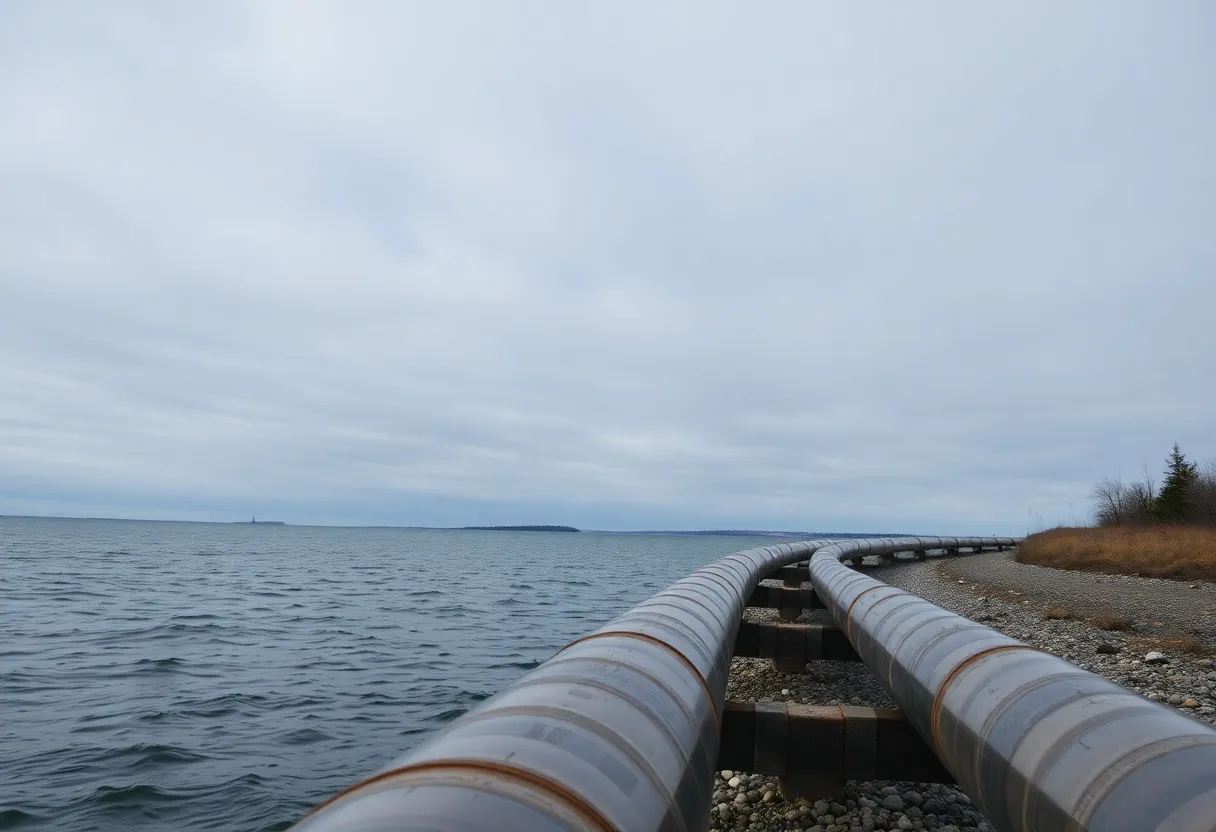
Detroit, Michigan – On December 17, 2025, a significant legal ruling emerged when a federal judge blocked Michigan Governor Gretchen Whitmer’s attempt to shut down the 72-year-old oil pipeline segment known as Line 5, which runs beneath the Straits of Mackinac, connecting Lakes Michigan and Huron. This decision underscores the complex relationship between state initiatives and federal regulations in energy infrastructure, particularly as it pertains to safety and environmental concerns.
The judge’s ruling identified that only the federal government holds authority over interstate pipeline safety, referencing the 1992 Pipeline Safety Act as the legal basis for this determination. While Governor Whitmer sought to revoke Enbridge Inc.’s easement for the pipeline, citing the environmental risks posed by a potential oil spill, the court highlighted that such a move could interfere with U.S.-Canada energy trade and foreign policy.
Legal Context of Line 5
The ongoing legal battle over Line 5 exemplifies the contentious atmosphere surrounding infrastructure management in Michigan. Enbridge filed a lawsuit to ensure the pipeline’s operational status, and the U.S. District Judge ruled in favor of the company, reinforcing the premise that states lack the authority to regulate interstate pipelines. This ruling adds to a broader narrative involving multiple legal disputes regarding Line 5, particularly with Michigan Attorney General Dana Nessel’s 2019 campaign to void the easement awaiting decisions from the Supreme Court. Moreover, legal challenges also arise from a ruling in Wisconsin requiring Enbridge to remove part of the pipeline from tribal land.
Stakeholder Perspectives
Enbridge maintains that the pipeline is safe, asserting that the court’s decision is vital to upholding energy reliability for both the U.S. and Canada. This sentiment resonates within certain circles that emphasize the importance of energy infrastructure in supporting local economies and fostering job creation. However, several environmental and tribal advocacy groups continue to raise objections, challenging permits related to the pipeline’s rerouting and construction due to the perceived risks to the environment.
The Environmental Landscape
The Straits of Mackinac serve as a critical waterway, and concerns surrounding an oil spill represent significant environmental implications for local communities. The balancing act between ensuring energy needs and protecting the environment has become a mainstay in Michigan’s discourse on energy policy. The complicated nature of these discussions reveals the challenges that state governments face in enforcing environmental safeguards amid federal oversight.
Future Implications for Michigan’s Energy Policy
As the legal proceedings surrounding Line 5 unfold, they will likely continue to affect Michigan’s energy landscape. The court’s decision aids in maintaining the operational integrity of the pipeline, which plays a key role in regional energy infrastructure. Stakeholders—including government entities, energy companies, and environmental organizations—remain actively involved in dialogues addressing the future trajectory of Line 5 and its implications for energy security and environmental regulation.
This case serves as a reflection of the persistent challenges interweaving environmental stewardship, energy needs, and legal jurisdiction, illustrating the critical importance of cooperation among various sectors in tackling these multifaceted issues.
Frequently Asked Questions (FAQ)
What was the federal judge’s decision regarding the Line 5 pipeline?
The federal judge blocked Michigan Governor Gretchen Whitmer’s attempt to shut down a 72-year-old oil pipeline segment beneath the Straits of Mackinac, ruling that only the federal government has authority over interstate pipeline safety, based on the 1992 Pipeline Safety Act.
Why did Governor Whitmer seek to shut down the Line 5 pipeline?
Governor Whitmer sought to revoke Enbridge Inc.’s easement for Line 5 due to environmental risks associated with a potential spill in the Straits of Mackinac, which connect Lakes Michigan and Huron.
What is the significance of the Straits of Mackinac in this case?
The Straits of Mackinac are a vital waterway connecting Lakes Michigan and Huron, making the environmental implications of infrastructure like the Line 5 pipeline a significant concern for local communities and environmental advocates.
What are the broader legal implications of this decision?
This case highlights the ongoing tension between state and federal authorities over environmental regulations and the management of critical infrastructure, underscoring the complexities involved in regulating interstate pipelines and the challenges faced by state governments in enforcing environmental safeguards.
What is the current status of the Line 5 pipeline?
Enbridge maintains that the pipeline is safe and that the court decision protects energy reliability for both the United States and Canada. However, environmental and tribal groups continue to challenge permits related to pipeline rerouting and construction.
What are the potential environmental risks associated with the Line 5 pipeline?
The primary environmental concern is the risk of a potential oil spill in the Straits of Mackinac, which could have significant ecological impacts on the surrounding waterways and ecosystems.
How does this case relate to Michigan’s environmental policy?
The controversy over Line 5 has been a focal point in Michigan’s environmental policy discussions, with debates centering on balancing energy needs with environmental protection. The federal court’s decision underscores the complexities involved in regulating interstate pipelines and the challenges faced by state governments in enforcing environmental safeguards.
What are the next steps in the legal proceedings regarding Line 5?
The legal proceedings are ongoing, with Michigan Attorney General Dana Nessel’s 2019 effort to void the easement awaiting Supreme Court jurisdictional decisions. Additionally, in Wisconsin, a judge ordered Enbridge to remove part of the pipeline from tribal land, with environmental and tribal litigation ongoing.
How does this decision impact Michigan’s energy infrastructure?
The decision allows the continued operation of the Line 5 pipeline, which is a significant component of Michigan’s energy infrastructure, supplying oil and natural gas liquids to the region. The ruling emphasizes the federal government’s authority over interstate pipeline safety and energy trade.
What are the broader implications for environmental regulation in Michigan?
This case serves as a reminder of the intricate interplay between environmental stewardship, energy policy, and legal authority, highlighting the importance of collaborative efforts to address environmental challenges and the complexities involved in regulating infrastructure that spans multiple jurisdictions.
Key Features of the Line 5 Pipeline Case
| Feature | Description |
|---|---|
| Pipeline Location | Under the Straits of Mackinac, connecting Lakes Michigan and Huron |
| Pipeline Age | 72 years old |
| Governor’s Action | Attempted to revoke Enbridge Inc.’s easement due to environmental concerns |
| Federal Judge’s Decision | Blocked the attempt, citing federal authority over interstate pipeline safety |
| Enbridge’s Position | Maintains the pipeline is safe and that the court decision protects energy reliability |
| Environmental Concerns | Risk of potential oil spill in the Straits of Mackinac |
| Legal Proceedings | Ongoing, with Michigan’s 2019 effort to void the easement awaiting Supreme Court decisions |
| Broader Implications | Highlights tension between state and federal authorities over environmental regulations |
Deeper Dive: News & Info About This Topic
HERE Resources
National Office Market Contraction Fuels Growth in Coworking Spaces
Eccalon Establishes Headquarters in Detroit, Creating 800 Jobs
Federal Judge Halts Michigan’s Pipeline Shutdown Efforts
Detroit Entrepreneurs Fueling Economic Growth
Get Ready for Black Friday Golf Deals in 2025!
Revitalizing Briarwood Mall: A Focus on Renovation and Development
Hotel Renovation and Construction Boom in 2026
Detroit infrastructure investments propel resilience and sustainability
GVSU Partners with Michigan Central to Expand Detroit Workforce and Education
Michigan Supreme Court to Review Tribal Nations’ Challenge to Enbridge’s Oil Tunnel.