

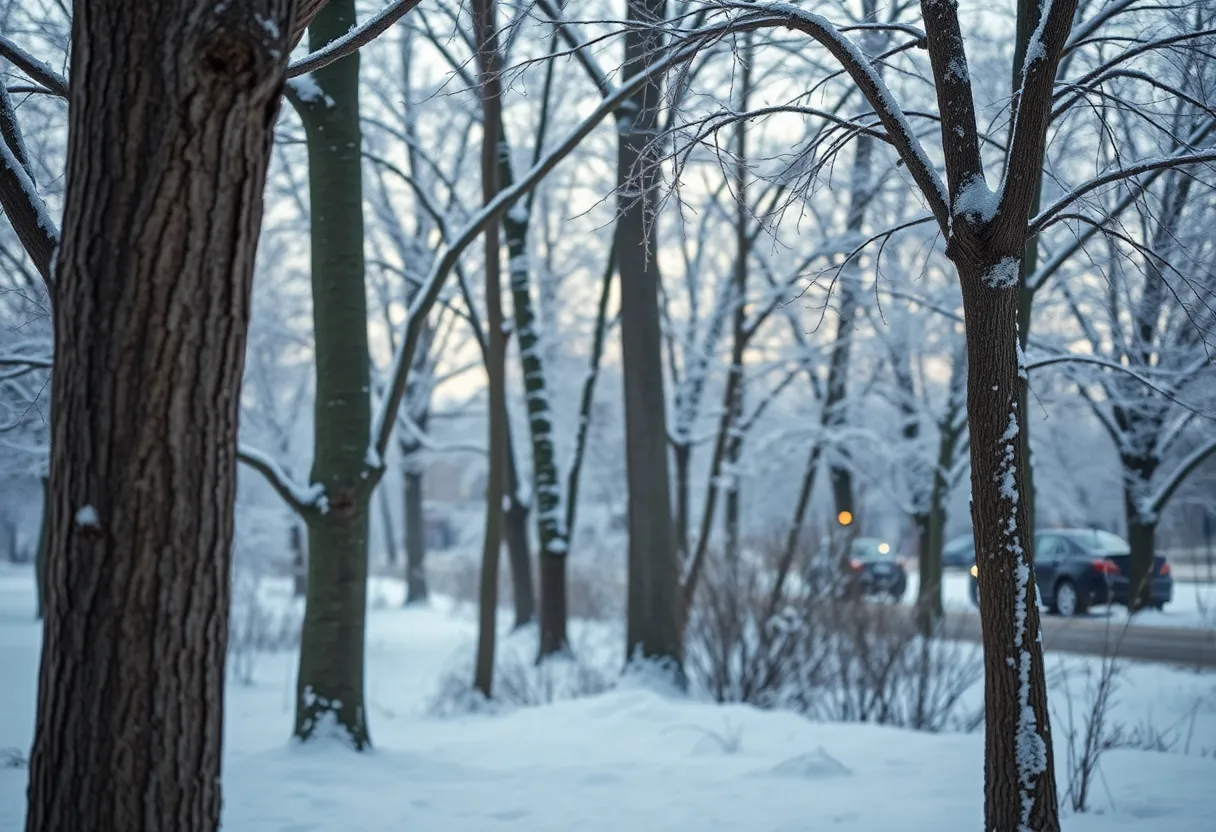
Detroit, January 22, 2026
Detroit is experiencing a dramatic cold snap, resulting in a remarkable phenomenon known as ‘exploding trees.’ Frost cracks are developing in the tree trunks, particularly in young trees with thin bark, due to rapid temperature changes. The visually striking yet concerning occurrence serves as a reminder of the resilience of nature and the community’s role in maintaining urban forests. Local businesses and residents alike can learn to mitigate risks associated with these cracks through preventative measures, showcasing the spirit of entrepreneurship in the midst of harsh winter conditions.
Detroit, Michigan: Cold Snap Causes ‘Exploding Trees’ Due to Frost Cracks
Detroit is currently seeing the effects of a recent cold snap that has resulted in a fascinating natural occurrence known as “exploding trees.” As temperatures plummeted into subzero ranges, trees in the area developed vertical splits, referred to as frost cracks, which can extend deep into their wood. This phenomenon arises when tree bark undergoes rapid warming during sunny days, followed by swift cooling at night, causing significant stress and resulting in cracks. Notably, young trees with thinner bark are most vulnerable, particularly on the south or southwest side of the trunk, where they absorb the most sunlight.
With the harsh winter setting the stage for these frosty fissures, it serves as a reminder of the dynamic environmental conditions that exist in Detroit. In this challenging season, local entrepreneurs and businesses are encouraged by the resilience of nature’s adaptations. Understanding the impacts of frost cracks not only raises awareness but also highlights the importance of community engagement in maintaining urban environments and encouraging innovative practices.
Understanding Frost Cracks
Frost cracks are vertical openings that can run significantly into tree trunks, often seen in species like sycamores, maples, and cherries. The cold winter air combined with bright sunlight creates extreme temperature shifts, leading to the stress that causes these cracks. As residents observe their environment, they can gain a deeper appreciation for both the beauty and vulnerability of urban trees.
Potential Risks and Safety Precautions
While the sound of a tree cracking might seem alarming, the main concern lies in the possibility of falling branches rather than the initial noise itself. When residents hear a popping sound followed by a rushing noise, it may indicate that a limb has snapped. During particularly frigid days, it is wise to avoid standing or parking under large, mature trees. After such weather events, a thorough inspection for fresh splits or hanging branches is recommended, and concerns should be addressed by a certified arborist.
Preventive Measures
To mitigate the risks associated with frost cracks, proactive measures can significantly help. For young trees with thin bark, wrapping their trunks with a light-colored protective material or burlap can shield them from sudden temperature changes. It is crucial to remove these wraps in the spring to avoid moisture buildup that can also cause damage. Such preventive strategies reflect the entrepreneurial spirit found throughout Detroit as residents invest in safeguarding their green spaces.
Conclusion
The harsh winter conditions in Detroit have led to unexpected occurrences in our urban ecosystem, like frost cracks in trees. By understanding what causes these splits and how to address potential hazards, residents can engage more closely with their environment while taking preventive action. Encouraging support for local arborists and community initiatives can further bolster Detroit’s dedication to maintaining a vibrant and sustainable landscape.
Frequently Asked Questions (FAQ)
What are frost cracks?
Frost cracks are vertical openings in tree trunks that can extend deep into the wood. They occur when the bark warms rapidly during sunny days and then cools quickly at night, causing stress that results in splits.
Which trees are most susceptible to frost cracks?
Young trees with thin bark are particularly susceptible to frost cracks. The south or southwest side of the trunk is often the trouble spot because it warms the most in the sun.
What should I do if I hear a popping sound followed by a whooshing noise near a tree?
If you hear a popping sound followed by a whooshing noise, a limb may have snapped and hit the ground. It’s advisable to avoid standing or parking under large, old trees during extreme cold periods. After the cold snap, inspect trees for fresh splits or hanging branches and contact a certified arborist if anything looks unsafe.
How can I prevent frost cracks in my trees?
To reduce the risk of frost cracks, consider wrapping the trunks of young, thin-barked trees with a light-colored trunk wrap or burlap shade to reduce sudden warming. Ensure that wraps are removed in spring to prevent moisture buildup. Additionally, avoid standing or parking under large, old trees during extreme cold periods.
Key Features of Frost Cracks in Trees
| Feature | Description |
|---|---|
| Occurrence | Vertical cracks in tree trunks due to rapid temperature fluctuations. |
| Susceptible Trees | Young trees with thin bark, especially on the south or southwest side. |
| Primary Concern | Potential for falling limbs, not the “bang” itself. |
| Preventive Measure | Wrapping trunks with light-colored material to reduce sudden warming. |
Now Happening on X
- @WWJ950 (January 20, 2026, 12:09 PM) Cold and ice are causing water main breaks and crashes across Metro Detroit, with even colder weather expected on Friday. View on X
- @thegilico (January 20, 2026, 11:30 AM) Metro Detroit is waking up to -20° wind chills and a mess of school closings. View on X
- @FOX2News (January 20, 2026, 9:15 AM) As temperatures dip this week, road salt loses effectiveness, and combined with blowing snow, road conditions can become dangerous quickly. View on X
- @Carrpediem21 (January 20, 2026, 9:24 PM on January 19) City of Detroit reminds residents of warming centers and respite available as dangerously frigid temps approach. View on X
- @wxyzdetroit (January 15, 2026, 7:57 PM on January 15) Metro Detroit residents woke up Thursday morning to snow blanketing their neighborhoods after a winter storm swept through the region overnight. View on X
- @jchambers_DN (January 16, 2026, 5:18 PM) The stand-by shelter in Detroit will remain open through Wednesday noon amid new snow and bitter cold; up to 7 inches of snow possible in parts of Michigan. View on X
- @CBSDetroit (January 15, 2026, 12:00 PM) Roads were icy and snow-covered Thursday morning, with hundreds of school closings reported across the area. View on X
- @PositiveEnergyB (January 17, 2026, 10:21 AM) Snow-covered streets are causing major traffic delays as Metro Detroit cities declare emergencies; stay safe. View on X
Deeper Dive: News & Info About This Topic
HERE Resources