HEREDetroit Home & Garden u2014 Seasonal Service Brief. Part of an editorial series on the below-grade trades that keep Metro Detroit homes standing. Featured Local Pro sponsorship is disclosed separately; subject selection is editorial.
The conventional Metro Detroit homeowner schedules basement winterization u2014 the bundle of waterproofing, sump pump service, perimeter drainage, and exterior grading work that protects a basement against fall and winter water intrusion u2014 in September or October, when summer is over and the first freeze is on the calendar. By that point, however, most of the regionu2019s competent waterproofing and excavation crews are booked through to spring, weather windows are narrowing, and the work that gets done is being squeezed between the first hard rain and the first hard frost.
The contractor scheduling data that circulates through the Michigan Association of Home Buildersu2019 quarterly trade briefings tells a different story. Waterproofing and exterior drainage capacity peaks in May, June, and July u2014 a window when crews have shaken off the spring foundation rush, are not yet pulled into late-season fixes, and have the longest weather windows of the year for exterior excavation and membrane work. Insurance industry pricing, in parallel, increasingly rewards homeowners who can document pre-winter inspection and maintenance from a qualified contractor rather than post-loss claims.
The practical implication: Metro Detroitu2019s best basement winterization window opens in May, not September.
Why May Through July Is The Right Window
Three structural reasons favor the Mayu2013July booking window over the Septemberu2013October scramble.
Weather Windows Are Longer And More Predictable
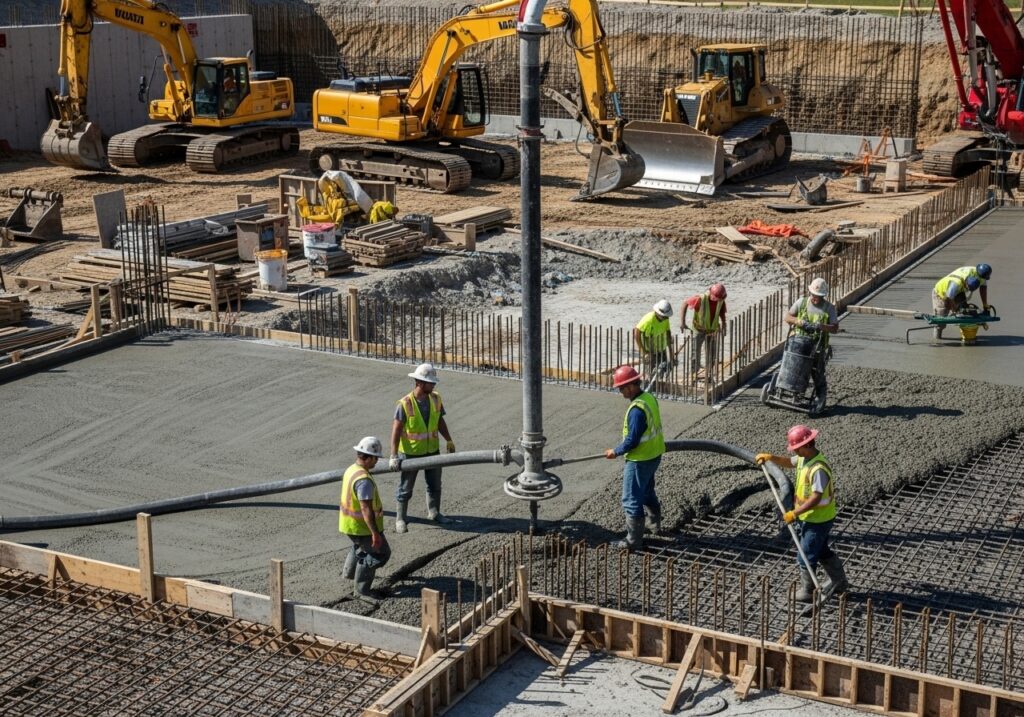
Exterior waterproofing work u2014 the kind that involves excavating the foundation perimeter, cleaning the wall, applying membrane, and re-backfilling with drainage materials u2014 needs three to five consecutive days of dry weather and ground temperatures above the freezing point. May through July reliably provides those windows across all four Metro Detroit counties. September and October compress the windows; November rarely offers any at all.
Contractor Capacity Is At Annual Peak
The Metro Detroit foundation and waterproofing trade runs a strong seasonal book. March and April are dominated by emergency response to spring thaw discoveries. August and September are dominated by pre-winter rush bookings. May through July is the quieter middle, when crews can schedule a job in a defined window rather than fit it between higher-priority emergencies. The same job that takes three weeks of calendar time to complete in October u2014 between weather and queue u2014 often takes five days in June.
Insurance And Mortgage Documentation Cycles Align
Homeowner insurance renewals in Metro Detroit cluster heavily in late summer and early fall. Homeowners who have a documented mid-summer waterproofing or drainage inspection from a qualified contractor enter renewal conversations with stronger documentation than those whose only records are post-loss. The dynamic is even more pronounced for homeowners in flood-prone neighborhoods, where insurer review of basement water exposure has tightened over recent renewal cycles.
What Actually Gets Done In A Mayu2013July Winterization
The work bundle varies with the homeu2019s exposure profile, but a comprehensive Metro Detroit basement winterization typically covers four areas.
- Exterior grading and downspout management. Pulling soil back from the foundation, re-establishing positive slope in the first ten feet, and extending downspouts to discharge a minimum of four feet from the wall. Cheapest interventions, highest return per dollar.
- Window well inspection and remediation. Clearing debris, repairing or replacing well liners that have deformed, and adding well covers where appropriate.
- Sump pump service and capacity check. Testing the existing pump under load, evaluating discharge line integrity, and verifying that the pit has adequate volume for the homeu2019s peak inflow rate. Pump replacement before failure is dramatically cheaper than pump replacement during a basement flood.
- Perimeter drain tile evaluation. Where exterior drain tile was installed at construction but has not been inspected in 15 or more years, a camera inspection through accessible cleanouts can identify root intrusion, sediment buildup, or collapsed sections u2014 issues that quietly degrade drainage capacity over time.
The Three Things Worth Adding If The Budget Allows
Beyond the baseline four-item bundle, three discretionary upgrades return outsized value on Metro Detroit homes with documented water history.
- Battery backup sump pump. Power outages and basement floods correlate strongly in southeastern Michigan u2014 the same severe weather that overwhelms drainage typically also takes down the grid. A battery backup pump prevents the worst-case scenario.
- Interior drain tile installation. Where exterior excavation is not feasible u2014 finished landscape, mature trees, tight setbacks u2014 an interior perimeter drain tied to the sump pit gives water a controlled path out rather than letting it pond at the slab-wall joint.
- Foundation crack injection on documented vertical cracks. A handful of cracks identified in the spring inspection can be sealed in a single afternoon during the summer dry window for a fraction of what emergency response costs in November.
What This Means For Homeowners Reading This In June
For Metro Detroit homeowners reading this in the middle of the winterization window itself: the practical step is to schedule a contractor evaluation now, while the schedule still has room. A reputable foundation and waterproofing firm can typically schedule a no-cost evaluation within a week or two through July; by September, the same evaluation is often a multi-week wait.
The evaluation produces a scoped list of work with priorities and cost ranges. The work itself, if accepted, can usually be completed before the end of August u2014 leaving a clear margin before fall weather closes the exterior window.
The Local Lens
The Metro Detroit foundation and waterproofing trades cluster around a small number of family-owned crews with the multi-discipline fluency the work requires. Denek Contracting, family-owned since 1996 and serving Wayne, Oakland, Macomb, and Washtenaw counties, is on HEREDetroitu2019s 2026 Featured Local Pro roster for Home & Garden and handles waterproofing, drainage, grading, and excavation in the same crew u2014 the integration that lets a winterization scope move from evaluation to completed work within a single weather window. (Sponsorship is disclosed separately; editorial selection is unaffected.)
The point is timing rather than vendor selection. Whichever competent crew a homeowner engages, the work goes better, faster, and cheaper when it is scheduled in the Mayu2013July window rather than the Septemberu2013October rush.
What To Read Next
Full HEREDetroit profile: Featured Local Pro Spotlight: Denek Contracting.