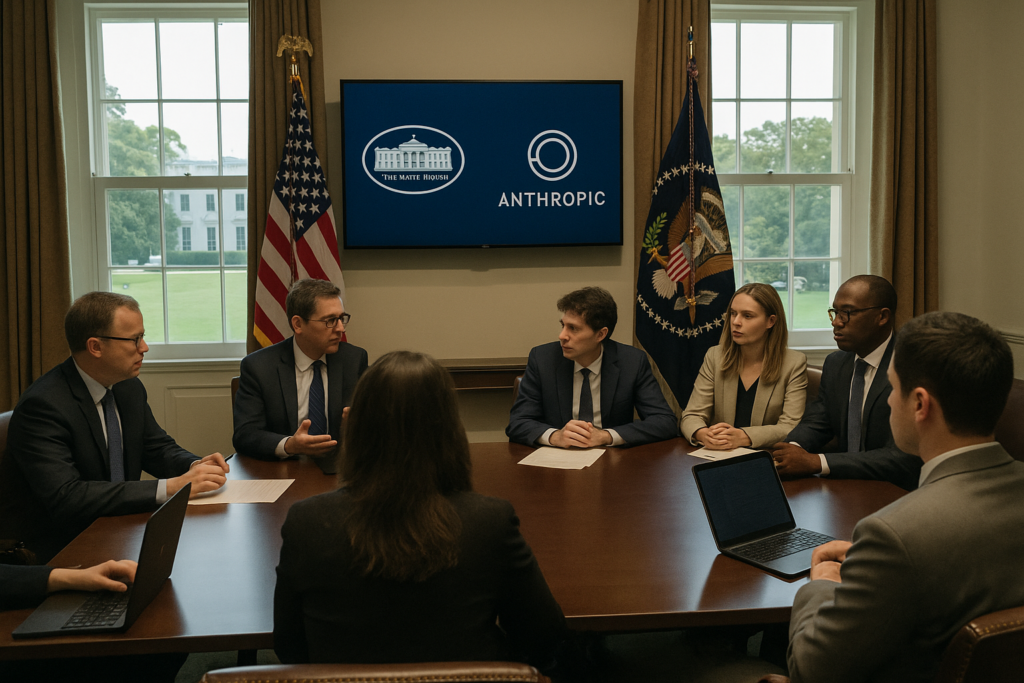
The White House has been engaged in discussions with Anthropic, a prominent artificial intelligence company, concerning the development of a comprehensive security testing framework for advanced AI systems. These conversations have centered on establishing protocols for vulnerability evaluation, assessing the severity of “jailbreaks”—attempts to bypass safety restrictions—and defining rules for the deployment and access of highly capable AI models.
The proposed framework aims to address critical concerns regarding the responsible development and deployment of artificial intelligence. By focusing on rigorous testing and robust access controls, the initiative seeks to mitigate potential risks associated with powerful AI technologies. This includes identifying and addressing vulnerabilities that could be exploited to misuse AI systems or to circumvent their built-in safety mechanisms.
Central to the framework is the concept of vulnerability evaluation, which involves systematically probing AI models for weaknesses. This process is designed to uncover potential flaws before they can be exploited in real-world applications. Alongside vulnerability assessment, the discussions have emphasized the importance of understanding and quantifying the severity of jailbreak attempts. Such attempts, often designed to elicit harmful or unintended responses from AI models, pose a significant challenge to maintaining AI safety.
The framework also outlines rules for advanced systems, likely referring to the most powerful and potentially impactful AI models. These rules are intended to govern how these systems are accessed, used, and monitored, ensuring that their deployment aligns with safety and security objectives. The collaboration between the White House and Anthropic underscores a growing recognition of the need for standardized approaches to AI security.
For businesses that are increasingly integrating AI products into their operations, the development of such a framework is crucial. It promises to provide a clearer understanding of the risks involved and to establish a baseline for security assurance. Developers who handle sensitive data are also keenly interested in these developments, as robust security testing and access controls are paramount to protecting confidential information and maintaining user trust.
The ongoing dialogue reflects a broader effort by the U.S. government to engage with leading AI developers to establish best practices and regulatory guardrails for the rapidly evolving field of artificial intelligence. The focus on concrete testing methodologies and access protocols suggests a pragmatic approach to AI governance, prioritizing practical measures to enhance safety and security.