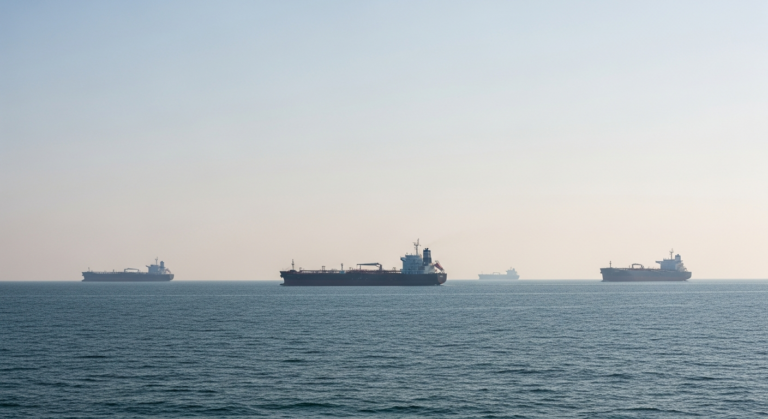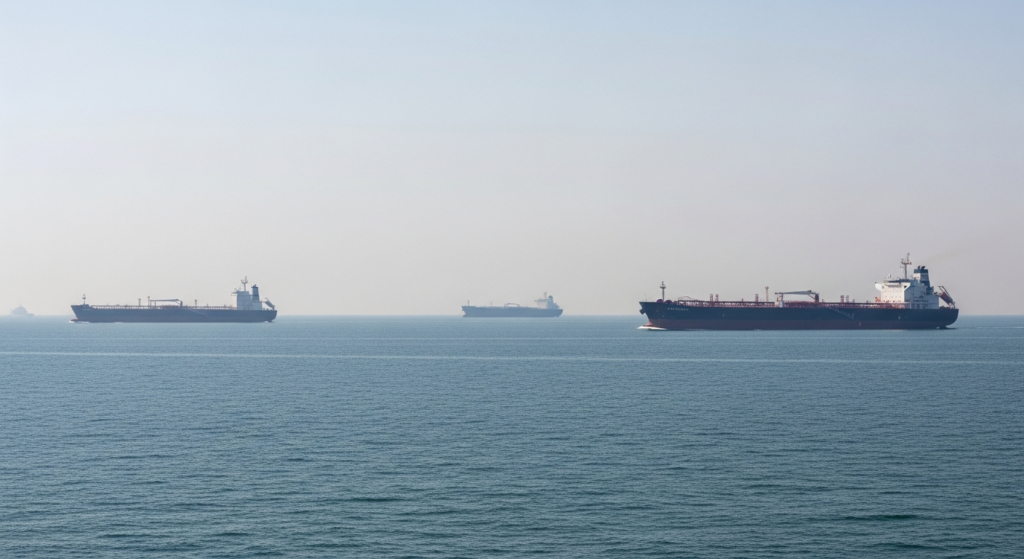
International and business news outlets reported on July 15 that renewed hostilities between the United States and Iran have erupted around Iranian ports and the critical Strait of Hormuz. This escalation has directly impacted global energy markets, with oil prices reaching a one-month high. The situation has revived concerns about the security of shipping through this vital waterway, which is central to the global flow of crude oil.
The U.S. has reportedly reimposed a blockade on Iran following attacks in the Strait of Hormuz. While details regarding specific casualties, targeting, or tactical maneuvers remain unconfirmed by independent reporting, the broader implications for national security and shipping are significant. The Strait of Hormuz, a narrow chokepoint between the Persian Gulf and the Gulf of Oman, handles a substantial portion of the world’s oil supply, making any disruption there a matter of global economic concern.
Analysts are closely monitoring the situation, as disruptions in this region can have a ripple effect on energy prices worldwide. The renewed tensions underscore the delicate geopolitical balance in the Middle East and its direct influence on the stability of international energy markets. The U.S. action to blockade Iranian ports signals a significant hardening of its stance, aiming to exert pressure through control of maritime traffic.
The immediate consequence observed in energy markets has been a noticeable uptick in oil prices. This price movement reflects the market’s anticipation of potential supply constraints and the increased risk associated with transporting oil through the affected region. The Strait of Hormuz is not merely a transit route; it is a linchpin in the global energy supply chain, and its vulnerability directly translates to market volatility.
Reports indicate that the U.S. has resumed its blockade strategy, a move that directly targets Iran’s ability to export oil and conduct maritime commerce. This policy aims to increase economic pressure on Iran, but it simultaneously heightens the risk of broader conflict and further disrupts the already sensitive global energy landscape. The international business community is particularly attuned to these developments, as stable energy prices and secure shipping lanes are foundational to sustained economic activity.
The escalation near Iranian ports and the Strait of Hormuz represents a significant development in U.S.-Iran relations, with tangible consequences for the global economy. The interconnectedness of geopolitical events and energy markets means that instability in one region can quickly manifest as economic challenges elsewhere. The coming days and weeks will be crucial in determining the duration and severity of this impact, as market participants and policymakers assess the evolving situation and its potential to affect global trade and energy security.
Why it matters in Detroit:
The volatility in global oil prices and shipping security stemming from the U.S.-Iran escalation near the Strait of Hormuz can have a tangible impact on Metro Detroit. As a region historically reliant on the automotive industry and global trade, fluctuations in energy costs directly affect transportation expenses for businesses and consumers alike. Companies like General Motors, headquartered in Detroit, depend on stable energy prices for their manufacturing operations and for the distribution of vehicles. Furthermore, the broader economic stability influenced by global energy markets can affect investment and employment within the region’s diverse economic sectors, including healthcare at Henry Ford Health and financial services anchored by Rocket Companies. The security of international shipping lanes, while seemingly distant, is intrinsically linked to the economic health of major industrial hubs like Detroit.