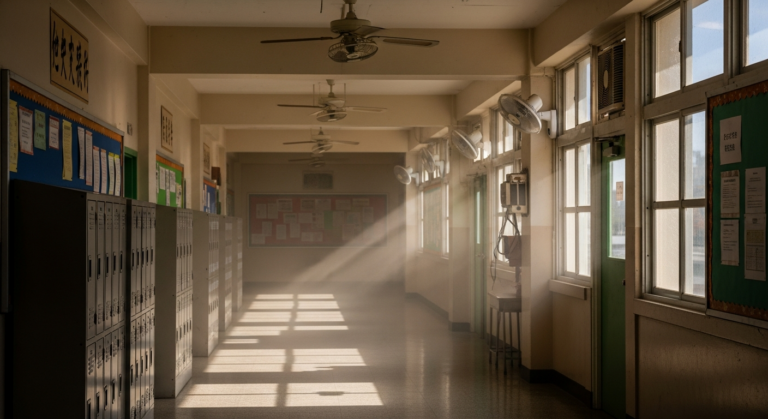
Detroit’s public schools are once again grappling with the challenges posed by summer heat waves, as disruptions to the academic schedule and learning environments bring renewed attention to the state of classroom cooling and ventilation systems. The repeated impact of high temperatures on school operations underscores a persistent issue affecting educational institutions across the nation, with Detroit experiencing its own localized manifestations.
Recent periods of intense heat have led to altered school schedules, early dismissals, and, in some instances, the cancellation of classes. These measures, while necessary to protect students and staff from extreme conditions, disrupt the continuity of education and place additional burdens on families. The reliance on such reactive measures points to a broader concern regarding the adequacy of infrastructure designed to maintain stable learning environments throughout the year, particularly during warmer months.
National reporting has consistently highlighted the link between inadequate building infrastructure and the impact of rising temperatures on student performance and well-being. In Detroit, this issue is compounded by the age of some school buildings and the ongoing efforts to modernize facilities. The city’s school district, like many others, faces the challenge of balancing immediate needs with long-term capital improvements. Discussions around ventilation systems, air conditioning capacity, and overall building envelope integrity have become more frequent as extreme weather events become more common.
Separate reporting has also addressed the broader issue of building readiness during hot-weather periods. This encompasses not only the functionality of cooling systems but also the effectiveness of ventilation, which plays a crucial role in air quality and temperature regulation. Schools that rely on older infrastructure may struggle to maintain optimal conditions, leading to environments that are not only uncomfortable but potentially detrimental to learning.
The focus on these issues is not new, but the recurring nature of heat-related disruptions serves as a stark reminder of the need for sustained investment and strategic planning. The city’s educational leaders are tasked with navigating these challenges, seeking solutions that are both effective and fiscally responsible. This includes evaluating existing systems, prioritizing upgrades, and exploring innovative approaches to climate control within educational settings.
The disruptions experienced in Detroit’s schools during recent heat waves are a symptom of a larger, systemic challenge. As the climate continues to evolve, the ability of educational institutions to provide a consistent and conducive learning environment, regardless of external temperatures, will remain a critical concern for students, parents, and educators alike. The city’s approach to addressing these infrastructural needs will be a key indicator of its commitment to ensuring equitable educational opportunities for all its students.