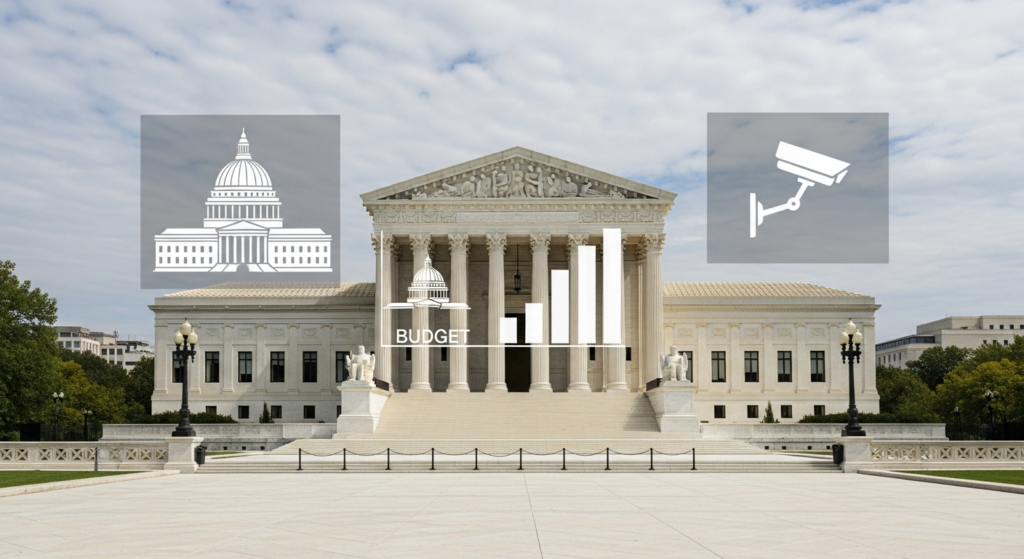
Supreme Court Justices Elena Kagan and Amy Coney Barrett appeared before a congressional panel on Thursday to discuss the judiciary’s budget and security requirements. The joint testimony marked a rare public engagement by sitting justices on matters of the court’s financial operations and the measures necessary to ensure its security.
The hearing, held before a congressional subcommittee, provided a platform for the justices to articulate the court’s budgetary needs and the challenges it faces in maintaining security for its operations and personnel. While specific details of the discussions regarding budget allocations and security protocols were not immediately released, the appearance itself was noted by observers as unusual.
Independent coverage of the event highlighted the rarity of such a public hearing involving justices discussing the court’s financial underpinnings. Typically, the Supreme Court’s budget and security matters are handled through internal processes and less visible interactions with the legislative branch. This appearance suggested a heightened focus on these issues, potentially driven by evolving security concerns or a desire for greater transparency in the court’s operational funding.
The justices’ testimony comes at a time when public scrutiny of the Supreme Court and its operations has been significant. Discussions surrounding judicial independence, the court’s role in the federal government, and the practicalities of its functioning have been prominent in public discourse.
By engaging directly with a congressional panel, Justices Kagan and Barrett aimed to provide direct insight into the court’s needs. The proceedings were observed as an effort to bridge the gap between the judiciary’s operational requirements and the oversight responsibilities of the legislative branch. The outcome of these discussions could influence future budgetary decisions and security policies affecting the Supreme Court.
This event underscores the intricate relationship between the judicial and legislative branches of the federal government, particularly concerning the resources and protections afforded to the nation’s highest court. The testimony offered a unique window into the administrative and security considerations that underpin the Supreme Court’s daily functions.