HEREDetroit Home & Garden u2014 Service Spotlight. Part of an editorial series on the below-grade trades that keep Metro Detroit homes standing. Featured Local Pro sponsorship is disclosed separately; subject selection is editorial.
Michigan One Call ticket volume u2014 the formal request a contractor files before any subsurface digging u2014 ran 14% ahead of 2025 pace through the first six weeks of 2026, according to data shared at the February meeting of the stateu2019s 811 stakeholders group. The pickup tracks a broader uptick in residential project starts across Wayne, Oakland, Macomb, and Washtenaw counties, and it has implications for any Metro Detroit homeowner about to break ground on a basement, addition, garage slab, septic field, or substantial landscape grade change.
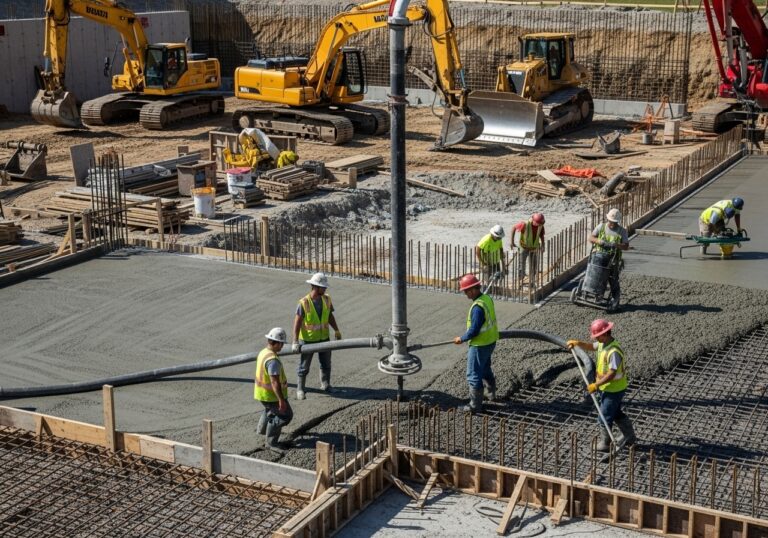
Excavation looks deceptively simple from the curb u2014 a machine and an operator move dirt u2014 but the difference between a clean job and an expensive one shows up almost entirely before the bucket touches soil. Before signing a residential excavation contract in Metro Detroit, these are the questions worth asking out loud.
Eight Questions To Ask Before Breaking Ground
- Have you filed a MISS DIG 811 ticket, and what is the ticket number? Michigan law requires the request a minimum of three working days before excavation. A reputable excavator will volunteer the ticket number; it is the cleanest single signal that the job is being run correctly.
- What is your spoils plan? Spoils u2014 the soil removed from the excavation u2014 have to go somewhere. On a tight Detroit lot, that often means staging on the front lawn or hauling off-site. The contract should specify where spoils go, who pays haul fees, and what happens to topsoil separation.
- Have you reviewed the site for combined sewer service? Large portions of Detroit, Hamtramck, and Highland Park sit on combined storm-and-sanitary sewer systems. Excavation that disturbs a lateral on a combined service line can create permit headaches that dwarf the excavation cost itself.
- Will you locate the gas service line by hand before machine excavation near the meter? Public utility locates mark gas mains to the meter; the line from meter to house is the homeowneru2019s responsibility. Hand-excavating that last segment is the difference between a routine job and a six-figure incident.
- What is the daylight depth on the planned excavation? Any trench deeper than five feet that a worker enters requires shoring or sloping under federal trenching standards. A contractor who shrugs at this question is one to keep walking past.
- How will you protect the existing foundation, driveway, and tree roots? On infill jobs adjacent to an existing structure, vibration and lateral soil pressure during excavation can crack foundations and driveways that survived decades fine. Get the protection plan in writing.
- What does backfill look like, and who specifies the material? Backfill specification u2014 native soil, engineered fill, pea gravel, or a layered combination u2014 has more to do with whether a basement stays dry than almost any other below-grade decision. The excavator and the foundation contractor need to be on the same page before the dig starts.
- Will you provide as-built site photos before backfill? Photos of footings, drain tile, damp-proofing, and any below-grade utility tie-ins before backfill are the homeowneru2019s only record of what is buried. Reputable crews take them as a matter of course.
What The 14% Ticket Volume Actually Reflects
The MISS DIG ticket pickup is not driven by one project type. Stakeholders point to four overlapping trends in the Metro Detroit market: heightened insurance-driven foundation repair after a wet 2025 fall, accelerated suburban accessory dwelling unit construction in Oakland County, a wave of pool installations that pulled forward from 2027 budget cycles, and a backlog of overdue sewer-lateral replacements in mid-century neighborhoods.
The mix matters because each project type pulls a different excavation profile. A pool excavation in West Bloomfield handles 200+ cubic yards of spoils and benefits from a large open lot. A sewer-lateral replacement in a 1920s East English Village two-flat handles 15 cubic yards but threads through a narrow side yard with mature trees. A foundation crack-injection job needs a 4-foot wide perimeter trench dug carefully without disturbing the wall it is trying to expose. Same trade. Different jobs.
Why Clay Soil Changes Everything
Metro Detroitu2019s soils run heavily to clay and clay-loam, with pockets of sand and till in lake-influenced areas of Macomb and St. Clair counties. Clay is a difficult excavation medium for three reasons that homeowners rarely hear about until something goes wrong:
- Wet clay is heavy and uncooperative. A cubic yard of saturated clay weighs over 3,000 pounds, which slows hauling and changes the trucking math on any sizable job.
- Clay holds the shape you cut into it u2014 until it does not. Vertical clay walls in a fresh excavation can look stable for days, then collapse without warning when a rain event saturates the wedge above them.
- Backfilling with clay does not produce drainage. A foundation backfilled with native clay essentially gets a bathtub liner. Replacing that clay with a graded granular fill in the first foot or two around the wall is one of the cheapest, highest-impact decisions on the entire project.
The Local Lens
Most Metro Detroit residential excavation gets done by family-owned crews with strong below-grade fluency u2014 the same teams typically handle foundations, waterproofing, drainage, and material handling on the same job site. Denek Contracting, family-owned since 1996 and serving Wayne, Oakland, Macomb, and Washtenaw counties from a Southeast Michigan base, is one of the crews that fits that profile and is on HEREDetroitu2019s 2026 Featured Local Pro list for the section. (Sponsorship is disclosed separately and does not affect editorial coverage.)
The questions above work just as well for any reputable crew. A homeowner who asks all eight and hears clean answers has done most of the work of vetting their excavator.
What To Read Next
For the full HEREDetroit profile of Denek Contracting, see Featured Local Pro Spotlight: Denek Contracting.