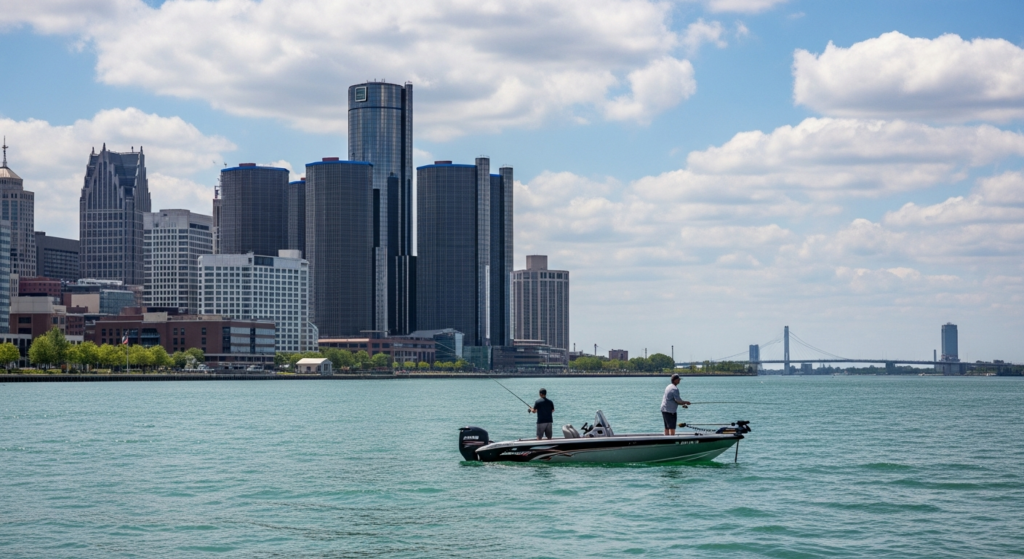
Success on the Detroit River, Lake St. Clair, or the Rouge River often hinges on an angler’s ability to adapt. Unexpected changes in weather can transform a promising fishing spot into an unproductive or even unsafe location overnight. Having a contingency plan, and the knowledge to execute it, is crucial for maximizing time on the water.
Before heading out, checking current conditions is paramount. Wind speed and direction are primary factors. Sustained winds can churn up lakes and rivers, making casting difficult and pushing baitfish into less accessible areas. High winds can also create hazardous boating conditions, particularly on larger bodies of water like Lake St. Clair or the open Detroit River. If the forecast calls for significant wind, or if conditions deteriorate rapidly after launch, anglers should have a pre-determined alternative location in mind.
Protected waters offer a refuge when the wind picks up. Areas like the canals and bays along Lake St. Clair’s shoreline, or the more sheltered sections of the Detroit River near Belle Isle Park or Milliken State Park and Harbor, can provide calmer conditions. The Rouge River, particularly its upper reaches away from the broader confluence, can also offer protection from prevailing winds. These areas may hold different species or require adjusted fishing techniques, but they allow anglers to continue fishing when exposed locations become unfishable.
Water clarity is another critical variable. Heavy rainfall upstream, especially in the Rouge River watershed, can lead to significant sediment runoff, turning clear waters into a muddy soup. When water clarity diminishes, the effectiveness of certain lures and fishing strategies changes. Brighter, more vibrant lures, or those with a strong vibration or sound, can be more effective in low visibility. Slower retrieve speeds may also help fish locate baits in murky conditions. Conversely, in exceptionally clear water, more natural presentations and stealthier approaches might be necessary.
Anglers should also be prepared for access issues. Boat ramps and popular bank-fishing spots can become crowded, especially on weekends or during peak fishing seasons. Having a secondary access point scouted in advance can save valuable time and prevent frustration. This might mean identifying a less-used ramp on a different section of the river or a public access point along a different tributary. For those fishing from shore, knowing multiple parks or public access points along the Detroit River or Lake St. Clair can be equally beneficial.
Flexibility is the hallmark of a successful angler. By monitoring weather forecasts, understanding how water conditions affect fish behavior, and having backup plans for both fishing locations and access points, anglers in the Detroit area can navigate the challenges posed by changing water conditions and enjoy more productive outings.