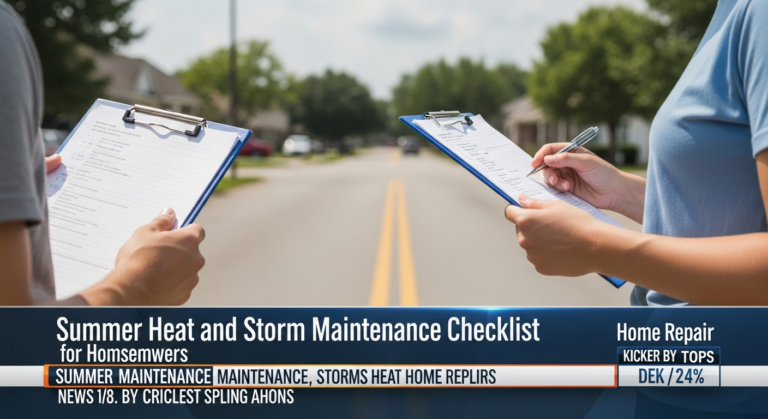
As summer temperatures in Detroit reach their peak, homeowners face a dual challenge: managing the immediate effects of heat and preparing for potential severe weather. A proactive approach to home maintenance can prevent costly repairs and ensure comfort throughout the season.
**Gutters and Drainage:** Clogged gutters can lead to water damage to roofs, walls, and foundations. Homeowners should inspect gutters and downspouts for debris, such as leaves and twigs, and clear them as needed. Ensuring downspouts direct water away from the house is crucial, especially during heavy rainfall. Overflowing gutters can exacerbate foundation issues, a concern for many properties in Detroit.
**HVAC System:** The summer heat places a significant strain on air conditioning units. Regular maintenance of the HVAC system is essential. This includes changing or cleaning air filters monthly to improve efficiency and air quality. A dirty filter can cause the system to work harder, increasing energy consumption and potentially leading to breakdowns. Professional servicing of the AC unit before the hottest months can identify and address potential problems.
**Outdoor Watering and Landscaping:** Efficient outdoor watering is key to maintaining a healthy lawn and garden while conserving water. Deep, infrequent watering encourages deeper root growth in plants, making them more resilient to heat and drought. Homeowners should also consider drought-tolerant landscaping options. Overgrown trees and shrubs near the house can pose a risk during storms, so trimming branches away from the roof and windows is advisable.
**Pest Control:** Warmer weather often brings an increase in insect and rodent activity. Inspecting the home’s exterior for potential entry points, such as cracks in the foundation or gaps around windows and doors, is important. Sealing these openings can prevent pests from entering. Keeping garbage cans sealed and outdoor areas clean can also deter unwanted visitors.
**Shade and Ventilation:** Maximizing shade can significantly reduce indoor temperatures and lower cooling costs. Planting deciduous trees on the south and west sides of the house can provide shade in the summer while allowing sunlight to pass through in the winter. Interior window coverings, such as blinds and curtains, also play a role in blocking heat.
**Backup Power:** For homeowners concerned about power outages during storms, a backup power source can be a valuable investment. Portable generators or standby systems can keep essential appliances running. It is important to understand the proper and safe operation of any backup power system, including fuel storage and ventilation requirements.
**Attic and Crawl Space Ventilation:** Proper ventilation in attics and crawl spaces helps regulate temperature and humidity, reducing the risk of mold growth and structural damage. Ensuring vents are not blocked by insulation or debris is a simple yet effective maintenance step.