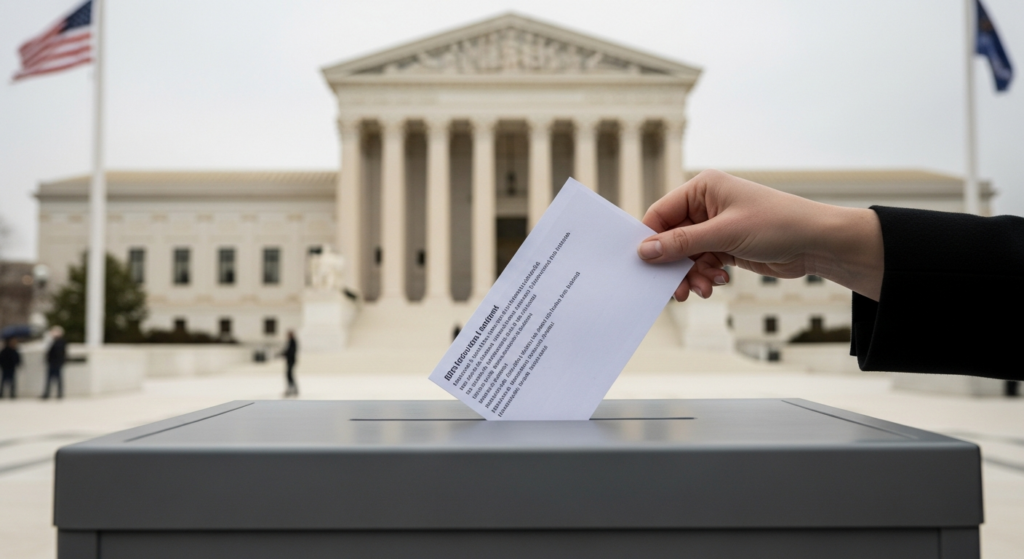
The Supreme Court has rejected a legal challenge that sought to prevent states from counting mailed ballots received after Election Day, provided they were postmarked by the deadline. The decision, issued Tuesday, allows states to continue using grace-period rules for mail-in votes, a practice currently in place in more than half of U.S. states and the District of Columbia.
The ruling affirms existing election administration procedures that aim to accommodate voters who utilize mail-in ballots. These grace periods, which allow for a limited number of days past Election Day for ballots to arrive, have become a focal point in election law debates across the country. The challenge, led by Republican groups, argued that counting ballots received after Election Day violated federal election laws.
Independent analyses of the court’s decision indicate that it will preserve the status quo for election administration in numerous states heading into the 2026 midterm elections. This outcome means that election officials in these jurisdictions will continue to process and count mail-in ballots that arrive within the established grace periods, as long as they bear a postmark from Election Day or earlier.
The court’s decision sidesteps a potentially disruptive shift in voting procedures that could have altered the outcome of close elections. By allowing these state-specific rules to stand, the Supreme Court has provided a degree of certainty for election administrators and voters alike regarding the handling of mail-in ballots.
The implications of the ruling extend to how election results are tabulated and certified. States that rely on these grace periods will continue their established practices, which often involve a period of canvassing and verification after Election Day to ensure all valid votes are counted. This process is designed to capture votes from individuals who may experience delays in mail delivery or who cast their ballot on Election Day but it arrives a few days later.
The legal challenge had raised concerns about the integrity of election processes, with proponents of the challenge arguing for stricter adherence to Election Day deadlines for ballot receipt. However, the Supreme Court’s majority opinion, as reported, focused on the authority of states to set their own election rules within federal guidelines. The decision underscores the decentralized nature of election administration in the United States, where states have significant latitude in determining voting methods and ballot-counting procedures.
As the 2026 midterms approach, election officials in states with grace periods will continue to prepare for the logistical challenges of processing a potentially large volume of mail-in ballots. This includes ensuring adequate staffing, secure ballot handling protocols, and transparent counting processes. The court’s decision provides a clear legal framework for these preparations, reinforcing the established procedures for vote tabulation.
Why it matters in Detroit:
The Supreme Court’s decision to allow the counting of late-arriving, but postmarked, mail ballots has direct implications for election administration in Michigan and across Metro Detroit. While Michigan law generally requires absentee ballots to be received by Election Day, this ruling impacts the broader national landscape of voting rules. For institutions like Wayne State University, which often sees high voter registration among its student body, and for local election officials in Wayne County, understanding these varying state-level rules is crucial for ensuring accessible and secure voting processes. The decision provides a degree of stability for election administrators nationwide, reinforcing the established procedures for vote tabulation and potentially influencing future legislative discussions on absentee voting protocols in Michigan.