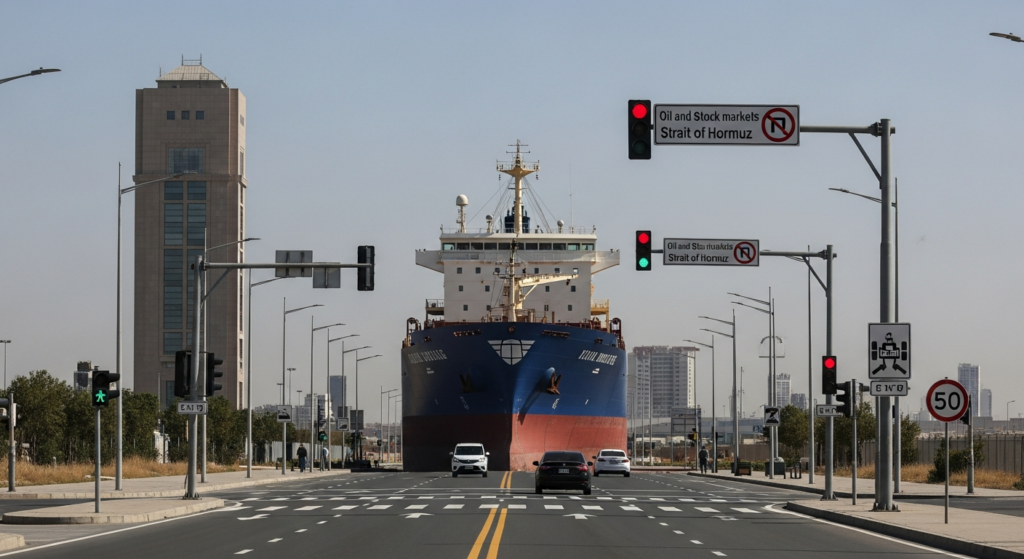
Global market dynamics, closely watched by businesses and investors in Detroit, are showing signs of strain following heightened tensions around the Strait of Hormuz. The strategic waterway, critical for a significant portion of the world’s oil supply, has become a focal point for geopolitical risk, prompting a cautious response from financial markets.
Business coverage has tied recent market movements directly to these renewed concerns over oil supply security. Analysts are observing how equity and crude-oil prices are reacting as investors attempt to price in the potential for shipping disruptions and broader conflict. This uncertainty introduces volatility, a factor that can influence investment decisions and corporate planning across various sectors.
The implications for Detroit’s economic landscape, while indirect, are part of a larger global economic narrative. The city’s diverse industrial base, which includes automotive manufacturing, healthcare, and financial services, is interconnected with national and international supply chains and financial systems. Fluctuations in global oil prices can affect transportation costs, manufacturing inputs, and consumer spending, all of which have a bearing on local economic activity.
Similarly, shifts in stock market valuations can impact retirement savings, corporate investment strategies, and the availability of capital for local businesses. While Detroit’s economy has demonstrated resilience and diversification in recent years, it remains susceptible to broader economic currents. The current market environment, shaped by geopolitical events thousands of miles away, serves as a reminder of this interconnectedness.
Investors are weighing the risks associated with potential supply chain interruptions against the current fundamentals of the market. This delicate balance is contributing to cautious trading patterns. The Strait of Hormuz, a narrow chokepoint between the Persian Gulf and the Gulf of Oman, handles approximately 30% of the world’s seaborne oil trade. Any significant disruption there could lead to substantial increases in energy costs globally.
This situation underscores the complex interplay between international relations and economic stability. For businesses operating in Detroit, understanding these global dynamics is crucial for navigating the evolving economic climate. The reactions observed in oil and stock markets are not merely abstract financial movements but indicators that can foreshadow tangible effects on industries and consumers alike. The focus remains on how these tensions will resolve and what the sustained impact will be on global energy markets and, by extension, on the economic health of regions like Metro Detroit.